

Effective infection prevention and control in a care home is no longer defined by written policies alone. UK care homes already operate within robust, well-documented frameworks aligned with national guidance, but the real challenge for senior leaders lies in ensuring these standards are consistently applied across every shift, role, and setting.
This gap between policy and practice presents differently in residential and nursing homes, and closing it requires tailored approaches rather than one-size-fits-all solutions…
Why Effective Infection Control Matters in Care Homes
Effective infection control is essential to protecting some of the most vulnerable individuals in society. Care home residents are often older adults with underlying health conditions, making them more vulnerable to infection and complications.
Strong infection control helps to:
- Reduce the spread of infections within communal living environments
- Prevent outbreaks that can escalate quickly in high-contact settings
- Protect residents, staff, and visiting families
- Reduce avoidable hospital admissions and pressure on acute services
- Ensure compliance with regulatory expectations such as CQC standards
Beyond compliance, effective infection control is directly linked to dignity, safety, and continuity of care. When it works well, its impact is often invisible, but when it fails, the consequences can be immediate and serious.
Residential Homes: Embedding Infection Control into Everyday Care
In residential settings, infection control is most vulnerable during routine, high-volume interactions: personal care, communal dining, shared activities and environmental cleaning. While residents may have lower clinical acuity, the density of social contact increases transmission risk.
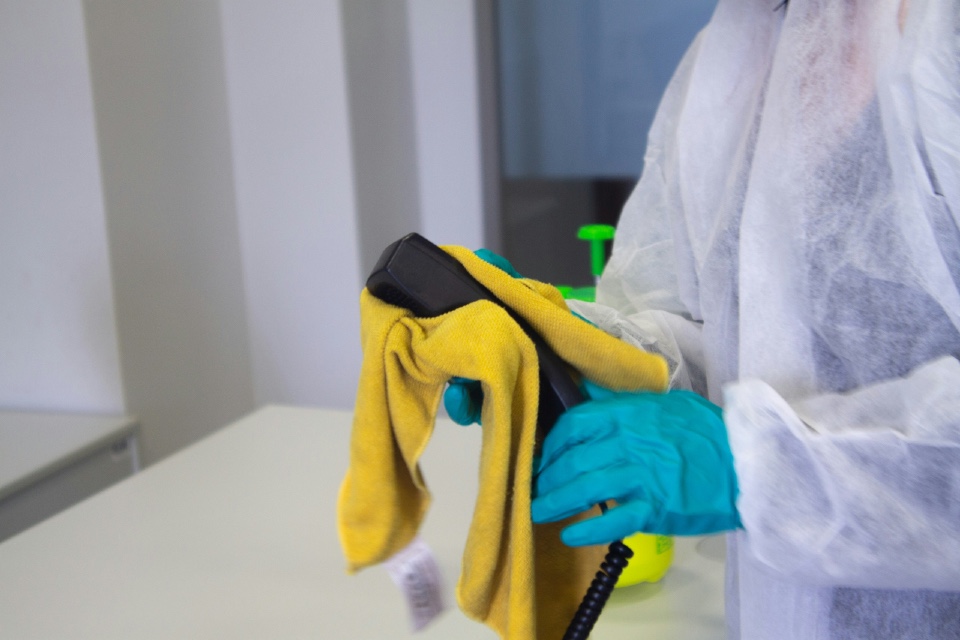
Best practice focuses on embedding infection control into daily routines, rather than treating it as a clinical overlay. This includes clear hand hygiene cues at points of care, simplified PPE protocols that reduce confusion, and cleaning schedules that align with how spaces are actually used, not how they are described in policy documents.
Training is most effective when it’s practical, visual and repeated regularly. Short, role-specific refreshers delivered on shift, supported by peer champions, outperform annual classroom sessions. Senior leaders play a critical role by reinforcing expectations through visible behaviours, not just audits.
Nursing Homes: Managing Clinical Complexity
Nursing homes face additional challenges: invasive procedures, wound care, medical devices and higher resident vulnerability. Here, the risk is not a lack of policy, but cognitive overload: too many protocols competing for attention in high-pressure environments.
The best-performing nursing homes are streamlining guidance into clear, prioritised workflows. Visual checklists, standardised equipment layouts and clear escalation triggers help staff make the right decisions quickly. Infection control teams are increasingly working alongside nursing leads to embed prevention measures into clinical pathways, rather than layering them on top.
Agency and bank staff remain a pressure point. Homes that manage this well provide rapid, standardised infection control induction supported by digital tools and clear accountability from shift leads.
Culture Over Compliance
Across both settings, the most significant differentiator is culture. Staff are far more likely to follow infection control practices when they feel supported rather than policed. Open reporting of near misses, non-punitive responses to errors, and shared problem-solving all contribute to safer practice.
Importantly, senior leaders must recognise the operational realities staff face. Infection control measures that slow care delivery or add unnecessary steps are unlikely to be sustained, no matter how well intentioned.
Practical Tips for Turning Your Infection Control Policy into Practice
Even well-designed policies can fail without effective implementation. Bridging the gap between documentation and daily care requires deliberate operational design.
Practical steps include:
- Translating policies into simple, task-based guidance for staff
- Using visual reminders at point-of-care locations
- Embedding infection control checks into existing workflows rather than adding separate tasks
- Providing regular, short refreshers instead of infrequent long training sessions
- Assigning infection control champions within each shift or unit
- Reviewing procedures based on real-world feedback, not just audits
These steps help ensure infection control becomes part of everyday behaviour rather than a standalone compliance requirement.
Conclusion
Effective infection control in care homes is less about introducing new policies and more about designing systems that work in real conditions. Residential and nursing homes may face different risks, but both benefit from the same principle: infection control succeeds when it is practical, prioritised and owned by everyone.
Are you searching for Infection Control solutions for your organisation? The Care Forum can help!
Photo by Vitaly Gariev on Unsplash