



By Nick Annetts, Founder of the Encore Platforms
‘Kicked the bucket’, ‘had a good innings’, ‘popped their clogs’, ‘snuffed it’, ‘pushing up the daisies’, even the very gentle ‘passed on’ are all euphemisms us Brits use to avoid saying the definitive “dead” word. It’s a subject we will say and do almost anything to skip around.
For something that will happen to every one of us, death remains a topic Britain is remarkably uncomfortable discussing. We will talk about almost anything else. Politics, Money, even deeply personal aspects of our lives. Yet when the conversation turns to death, the room often goes quiet.
This reluctance is not just anecdotal, it is measurable. Research commissioned by the Dying Matters Coalition found that 71% of people believe Britons are uncomfortable talking about death, dying and bereavement, and only 31% have discussed their own end-of-life wishes with someone close to them.
A major survey by the Co-op Group paints an equally stark picture. It found that almost 18 million people in the UK feel uncomfortable discussing death, with five million saying they would avoid talking about their own death altogether. In other words, millions of us would rather avoid the conversation entirely.
That silence has consequences as when people do not talk about death, planning often does not happen either. According to research highlighted by Hospice UK, only 13% of people have told loved ones where they would prefer to die and very few have discussed what kind of care they would want at the end of life. The result is that families are frequently left making difficult decisions without knowing what the person they love would have wanted.
It also means that many of the things that truly define a life never get shared. Stories go untold, lessons are left unspoken and memories that could have been passed down simply disappear. In trying to avoid discomfort, we risk losing something far more valuable.
The irony of our death taboo
What makes Britain’s reluctance particularly strange is that people clearly do want to talk about these issues. Research from the Dying Matters Coalition found that 78% of people believe discussing death would make it easier for their end-of-life wishes to be respected. So the problem is not that people think the conversation is unimportant. It is that they struggle to begin it.
Death remains one of the last subjects we treat as socially off limits. We associate it with sadness, hospitals and funerals rather than something that can also be reflective, meaningful and even life affirming.
But talking about death is not really about death at all. It is about life. Capturing a life while we are still living it is one of the reasons I founded For My Encore was because I saw how many families regret the conversations they never had. After someone dies, we often wish we had asked more questions, we wish we had recorded their stories, their advice, their reflections on life. By that point, of course, it is too late.
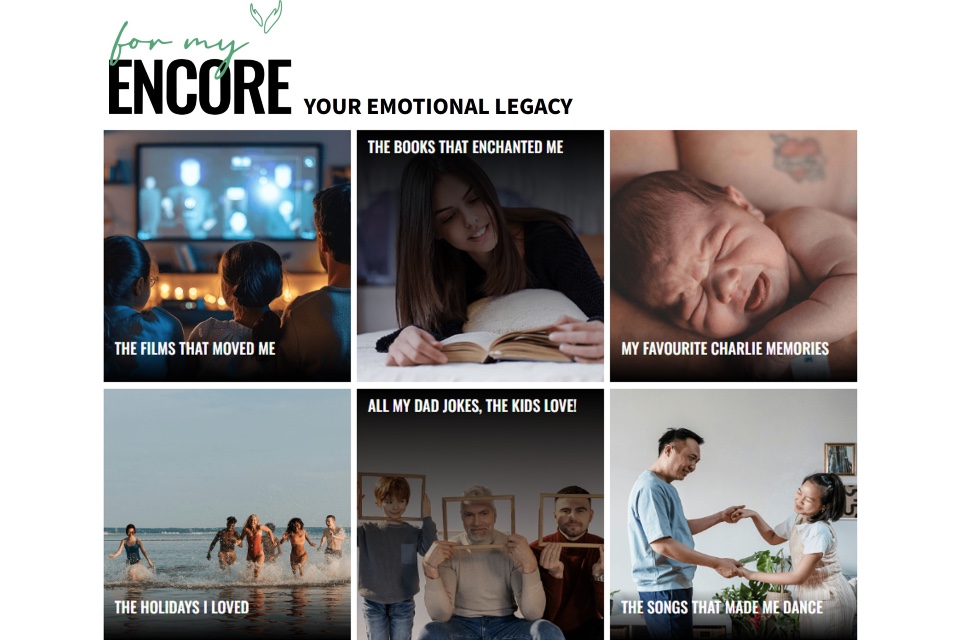
For My Encore was created to change that dynamic. The platform allows people to create a digital emotional legacy where they can capture their stories, memories, music and life lessons for the people they care about. It encourages people to reflect on the experiences that shaped them and to share those memories while they are still here to tell them, all through guided therapeutic questioning.
Using the same guided questioning technique, For Their Encore enables families to create tribute pages after someone has passed away, celebrating their life while raising funds for charities connected to them. The goal is not simply to memorialise people after death, it is to encourage conversations about legacy while we are still alive. When those conversations happen earlier, they tend to be richer and more meaningful. Knowing the woman behind the mum or the man behind the dad, can be a relationship game changer.
Time to change the conversation
Campaigns such as Dying Matters Awareness Week have helped start an important cultural shift, encouraging people to speak more openly about death and bereavement but Britain still has a long way to go.
In many cultures around the world, discussions about mortality are seen as a normal part of life. They help families prepare emotionally and practically for the future. In the UK, we still often treat death as something to be discussed only when circumstances force the issue.
It does not have to be this way
If we normalise the conversation, people can share the stories and values that matter most to them. Families can understand each other more deeply and when the time eventually comes, loved ones are left with clarity rather than uncertainty.
Death may be inevitable. Silence about it is not and perhaps the most meaningful legacy we can leave is not simply what we pass down, but the conversations we are brave enough to start.
Sources
- Dying Matters Coalition / Savanta survey on attitudes to death and dying in the UK.
- Co-op Group – “Making Peace with Death” report on UK attitudes to death.
- Hospice UK research on end-of-life conversations and planning.